The Spirit of the Early Church
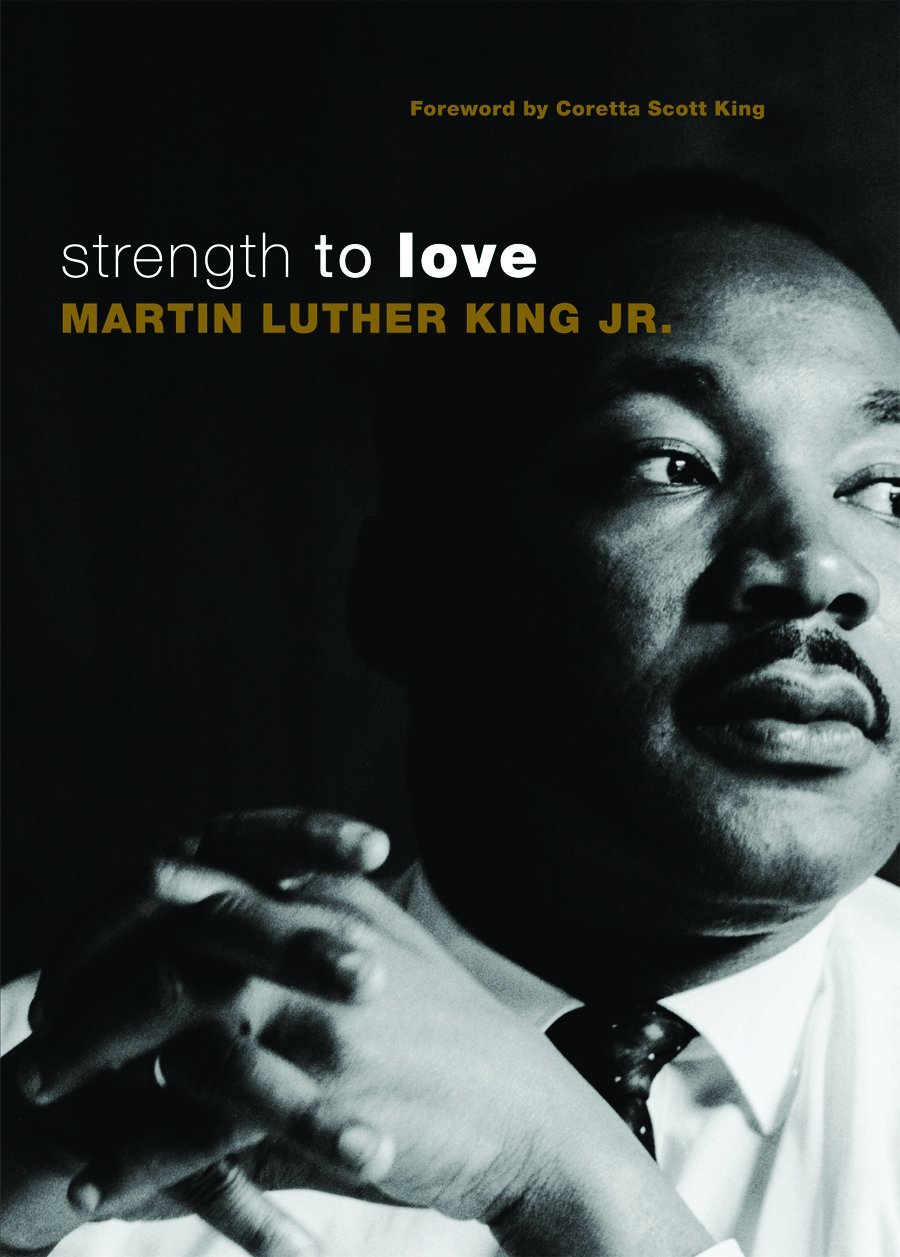
"We need to pledge ourselves anew to the cause of Christ. We must recapture the spirit of the early church." Martin Luther King Jr. Strength to Love
In his book Strength to Love, a prophetic text about the principles and practices of nonviolence, MLK jr. speaks words as relevant today as they were in 1963 when the sermons in the book were compiled. Addressing questions like:
Why does God allow evil?
What can we do in the face of evil in the world?
How can we confront the complexity of our own natures to meet the challenges of justice and peace:
What can Jesus teach us about adversity, love and freedom?
Dr. King evokes readers to claim the love, the truth and the courage to do what is right and to have the strength to love.
In Chapter 10, he says, "Would that the Christian fire were burning in the hearts of all Christians with the same intenisity as the Communist fire is burning in the hearts of Communists." and then poses the question, "Is communism alive in the world today because we have not been Christian enough?" to which he responds that we must recapture the spirit of the early church.
This section of King's book reminded me of a wonderful little book by Huston Smith entitled The Soul of Christianity. in which Smith describes the early Christians in a way that explains perfectly what Dr. King meant about the spirit of the early church. At the risk of being too verbose, I have included the section from Smith's book for your reading pleasure! I leave you with the important question: How can we recapture the spirit of the early church and be a triumphant witness for Christ everywhere we go?
"The Source of The Freedom to Give"
From The Soul of Christianity: Restoring the Great Tradition by Huston Smith
Part Two: “The Christian Story” p. 78 - 81
The people who heard Jesus’s disciples proclaiming the good news were as impressed by what they saw as by what they heard. They saw lives that had been transformed - men and women who were ordinary in every way except for the fact that they seemed to have found the secret of living. They evinced a tranquility, simplicity and cheerfulness that their hearers had nowhere else encountered. Here were people who seemed to be making a success of the enterprise everyone would like to succeed at – life itself.
Specifically, there seem to be two qualities in which their lives abounded. The first of these was mutual regard. One of the earliest observations by an outsider about Christians that we have is, “See how these Christians love one another.” Integral to this mutual regard was a total absence of social barriers; it was a discipleship of equals. Here were men and women who not only said that everyone was equal in the sight of God but who lived as though they meant it. The conventional barriers of race, gender and status meant nothing to them, for in Christ there was neither Jew nor Gentile, male nor female, slave nor free. As a consequence, in spite of differences in function or social position, their fellowship was marked by a sense of genuine equality.
Their second distinctive quality was happiness. When Jesus was in danger, his disciples were alarmed, but otherwise it was impossible to be sad in Jesus’s company. And when he told his disciples that he wanted his joy to be in them, “that your joy may be complete,” to a remarkable degree that objective was realized.
Outsiders found this baffling. These scattered Christians were not numerous. They were not wealthy or powerful, and they were in constant danger of being killed. Yet they had laid hold of an inner peace that found expression in a joy that was uncontainable. Perhaps radiant would be a better word. Radiance is hardly the word used to characterize the average religious life, but no other word fits as well the life of these early Christians.
What produced this love and joy in these early Christians? Everyone wants those qualities ; the question is how to get them. The explanation, insofar as we are able to gather from the New Testament record, is that three intolerable burdens had suddenly and dramatically been lifted from believers’ shoulders.
The first of these was fear including the fear of death. We have it from Swiss psychologist Carl Jung that he never met a patient over 40 whose problems did not route back to the fear of approaching death. The reason the Christians could not be intimidated by the lions (and even sang as they entered the Colosseum) was that Jesus’s counsel, “Fear not, for I am with you,” had gotten through to them.
The second burden they had been released from was guilt. Recognized or repressed, guilt seems built into the human condition, for no one lives up to his or her ideals completely. It is not only that we behave less well toward others than our conscience dictates; we also fail ourselves by leaving talents undeveloped and letting opportunities slip by. As a result, we have a hard time living with ourselves. We may manage to keep remorse at bay while the sun is up, but in the sleepless hours of the night it comes through and we feel
…the rending pain of re-enactment
Of all that you have done, and been; the shame
Of motives late revealed, and the awareness
Of things ill done and done to others’ harm
Which once you took as exercise of virtue.
T. S. Eliot, “Little Gidding”
Oppressive guilt reduces creativity. In its acute form it can rise to a fury of self-condemnation that shuts life down. Paul had felt its force before he was released: “Wretched man that I am! Who will rescue me from this body of death?”
The third release the early Christians experienced was from the cramping confines of ego. There is no reason to suppose that prior to their new life, these men and women were more self-centered than the next person, but they knew that their love was radically confined. They knew that the human curse is to love and sometimes to love well, but never to love well enough. Now that curse had been dramatically lifted.
It is not difficult to see how release from fear, guilt and self-centeredness could feel like rebirth if someone were to free us from these crippling impediments, we too would call that person Savior. But this only pushes our question back a step. How did the Christians get free of these burdens? And what did a man named Jesus, now gone have to do with the process, that they should credit it as his doing
The only power that can effect transformations of the order we have described is love.
Comments